




Short answer
There is no single best supplement for falling asleep faster. The best choice depends on why your sleep latency is high.
If your mind races, prioritize calming support such as L theanine, magnesium and lemon balm. If your schedule is shifted, melatonin used strategically may make more sense.
If you regularly lie in bed for 30 to 60 minutes before drifting off, you are not alone. What most people describe as “I cannot fall asleep” is often a sleep latency issue.
Sleep latency is the time it takes to transition from wakefulness into sleep. It is influenced by stress physiology, light exposure, caffeine timing, room temperature, screen use and the consistency of your evening routine.
Supplements can help, but only when you match the ingredient to your actual sleep pattern and remove the most common blockers first.
What does falling asleep fast actually mean?
In sleep science, the most relevant concept is sleep latency. This means how long it takes to fall asleep once you intend to sleep.
For many adults, a practical target is roughly 10 to 20 minutes. If you are consistently above 30 to 45 minutes, it is worth addressing routine, environment and stress load alongside any supplement strategy.
The goal is to reduce arousal, not force sedation. These are different mechanisms and they call for different ingredients.
The most useful supplements for falling asleep faster
Each sleep ingredient supports a different part of the sleep latency problem. Understanding which one fits your pattern matters more than choosing the most popular option.
01 · Foundation
Magnesium, especially glycinate
Magnesium supports relaxation and may help with muscle tension, stress related restlessness and the physical tightness that keeps people awake. For many people with high stress lifestyles, it is a practical starting point.
02 · Mental calm
L theanine
L theanine is used to reduce mental chatter without heavy next day sedation. It may suit people whose main obstacle is overthinking, screen driven stimulation or a stressful workday that follows them into bed.
03 · Wind down support
Lemon balm and gentle herbal extracts
Herbal extracts such as lemon balm are often used as part of a wind down ritual, especially when mild nervousness, stomach tension or the feeling of not switching off is part of the problem.
04 · Physical settling
Glycine
Glycine is commonly used for physical settling. It may help when the body feels unable to relax even though you are tired. It is not a sedative. Think of it as an ease into sleep signal.
05 · Circadian timing
Melatonin
Melatonin works more like a timing signal for your circadian rhythm than a traditional sleeping aid. It tends to make the most sense for jet lag, shift work or delayed sleep timing rather than nightly use for stress driven insomnia.
Match your sleep problem to the right ingredient
The honest answer is that there is no universally best sleep supplement. A better framework is to match the ingredient to the sleep pattern.
| Your sleep pattern | Best fit approach |
|---|---|
| Racing mind or mental chatter | L theanine, lemon balm, magnesium |
| Physical tension or restlessness | Magnesium glycinate, glycine, herbal support |
| Shifted schedule or jet lag | Melatonin with strategic timing and morning light |
| Mixed or multi factor sleep latency | Combination formula targeting calm and settling |
Why combinations often outperform single ingredients
Many people try one ingredient and conclude that nothing works. In reality, sleep latency problems are often multi factor. A well designed formula can combine complementary ingredients that target different mechanisms without relying on heavy sedation.
Body
Relaxation
Magnesium and glycine may support physical settling and reduced tension.
Mind
Calm
L theanine and herbal extracts may support reduced mental arousal.
Clock
Timing
Melatonin is best reserved for circadian timing issues rather than general stress.
A typical logic would be magnesium for baseline relaxation, L theanine for mental calm, and a gentle herb for wind down support. This often feels cleaner than relying on melatonin every night.
The blockers that make sleep supplements less effective
If the following habits are present, even a high quality sleep supplement may be fighting a losing battle.
- Late caffeine or high total daily caffeine intake
- Bright light and screens in the last 1 to 2 hours before bed
- Overheating, since warm rooms often worsen sleep latency
- Alcohol near bedtime, which may shorten latency but harm sleep quality
- Unmanaged stress and late night work stimulation
A practical rule: if you have not implemented a consistent sleep window and dim evenings, results from any supplement will likely be weaker than expected.
How to choose a sleep supplement without hype
- Look for clearly listed ingredient doses instead of hidden proprietary blends
- Choose the right forms, especially with magnesium
- Prioritize calm and sleep readiness over heavy sedation
- Avoid formulas that rely only on high dose melatonin
- Prefer coherent formulas over long ingredient lists with unclear logic
Timing is the most overlooked variable
Many people take a sleep supplement only after they are already in bed. For most calming ingredients, this is too late.
- 30 to 60 minutes before bed is a practical window for calming support
- Consistency across nights helps your body learn the pattern
- Dim lights and a short ritual can amplify the effect
Your brain learns cues. A repeatable micro ritual, such as dim lights, 10 minutes of reading or breathwork, then your supplement, can build a reliable sleep onset signal over time.
Bottom line
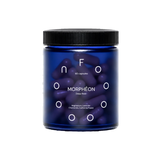
Falling asleep faster starts with calming the nervous system and building consistent sleep cues. For a formula built around this calm first philosophy, explore Morphéon and pair it with a realistic wind down routine.
Explore Morphéon →FAQ
What is the best supplement to fall asleep fast?
For most people, a calm first approach is the best starting point. Magnesium plus calming support such as L theanine may be useful when the main issue is racing thoughts or tension. Melatonin is most useful for circadian timing issues such as jet lag or shift work.
Can I take a sleep supplement every night?
It depends on the ingredient. Many calming nutrients and herbs are used consistently, while melatonin is often better used strategically for timing related sleep issues rather than as a nightly habit.
Will a sleep supplement make me groggy the next day?
Next day grogginess depends on the ingredient, dose, timing and sleep quality. Calm first formulas designed around arousal reduction usually aim to support sleep without heavy sedation or morning impairment.
What should I avoid if I want to fall asleep faster?
The main blockers are late caffeine, bright screens before bed, overheated rooms, alcohol near bedtime and high mental stimulation late at night.
How soon will I notice results from a sleep supplement?
Some people notice a difference within the first week. Others need 2 to 3 weeks for routines and physiology to stabilize. Supplements work best with a consistent sleep schedule and calm pre bed environment.


