




Summary
On ginkgo and dementia, the honest answer is mixed: two large, long trials found ginkgo did not lower the chance of developing dementia or Alzheimer's in older adults.
Some shorter trials in people already diagnosed suggest a standardised extract at 240 mg a day may help steady symptoms, but results are inconsistent. Ginkgo is generally well tolerated, with care needed around blood thinners.
Maybe a parent has started repeating stories, or you have noticed names slipping more than they used to. It is natural to look for something that might help the brain age well, and ginkgo is usually the first herb people hear about. This guide walks through what the research on ginkgo and dementia really shows, separating the big prevention trials from studies in people with memory problems, and explains doses and safety.
| At a glance | Ginkgo biloba |
|---|---|
| What it is | An extract of the leaves of the ginkgo tree, one of the oldest tree species on Earth |
| Most studied form | A standardised leaf extract known in research as EGb 761 |
| Amount in dementia trials | Usually 240 mg a day, often as 120 mg twice daily |
| Prevention trials | No reduction in new dementia or Alzheimer's cases |
| Trials in diagnosed dementia | Mixed; some show steadier symptoms over about six months |
| Key caution | Blood thinners and planned surgery |
What is ginkgo and why is it linked to brain health?
Ginkgo biloba is a tree with fan shaped leaves, used in traditional Chinese medicine for centuries. Modern extracts are made from the leaves and standardised for two groups of compounds, flavonoids and terpene lactones.
Researchers think these compounds may support blood flow in small vessels, act as antioxidants and influence chemical messengers in the brain. That is why ginkgo has been studied for memory, circulation and brain ageing. It is not a nutrient, so there is no food source or deficiency.
Ginkgo and dementia: who has been studied?
- Adults over 70 with normal memory or mild memory complaints, in the large prevention trials.
- People with mild cognitive impairment, a stage of memory change that does not yet affect daily life.
- People diagnosed with dementia, including Alzheimer's and vascular dementia, in shorter treatment trials.
- Healthy adults looking for everyday focus, studied in separate, smaller trials.
How ginkgo may help the ageing brain
Circulation in the brain
Ginkgo has been studied for its effects on blood flow in small vessels. Because vascular health matters for the brain, this is one reason it was tested in dementia.
Daily function and mood in dementia
Some trials in people already diagnosed measured not just memory but also everyday activities and behaviour. A few found benefits here, especially in people with symptoms such as agitation or low mood.
Memory complaints with age
For healthy older adults, research does not support ginkgo as a way to lower dementia risk. Any everyday benefit for focus is a separate and smaller question.
What the research on ginkgo and dementia shows
The GEM study (2008, JAMA). More than 3,000 adults aged 75 or over took 120 mg of ginkgo extract twice a day or a placebo, and were followed for a median of 6.1 years. Ginkgo did not reduce the rate of dementia or Alzheimer's, including in people who started with mild cognitive impairment.
In the GEM study, 3,069 adults aged 75 or over were followed for about six years. Taking 240 mg of ginkgo a day did not lower their rate of dementia compared with placebo.
The GuidAge study (2012, Lancet Neurology). In 2,854 French adults aged 70 or over with memory complaints, five years of the same dose did not reduce progression to Alzheimer's. Strokes and bleeding events were similar in both groups.
Cochrane review (2009). Looking at 36 trials, the reviewers found results for memory, daily living and mood were inconsistent. They described the evidence of a predictable, meaningful benefit in dementia as unreliable, while noting side effects were no more common than with placebo.
Meta analysis of the standard extract (2015, Journal of Alzheimer's Disease). Pooling nine trials with 2,561 people with cognitive impairment or dementia, researchers found that 240 mg a day for about six months was linked with steadier memory, daily function and overall clinical picture, especially in people with behavioural symptoms.
| Study | Who | Daily amount | Main finding |
|---|---|---|---|
| DeKosky, 2008 | 3,069 adults aged 75+ | 240 mg, about 6 years | No fewer dementia cases |
| Vellas, 2012 | 2,854 adults aged 70+ | 240 mg, 5 years | No fewer Alzheimer's cases |
| Birks, 2009 | 36 trials | Various | Inconsistent, unreliable benefit |
| Tan, 2015 | 9 trials, 2,561 people | 240 mg, 22 to 26 weeks | Possible steadier symptoms |
How much ginkgo was used, and when?
- Amount studied: 240 mg a day of standardised extract, often split into two doses.
- Time frame: treatment trials ran about six months; prevention trials ran five to six years.
- With food: taking it with a meal may reduce stomach upset.
- No reference value: as a herb, ginkgo has no EU daily reference value or upper limit.
Forms of ginkgo
Standardised leaf extracts are the form used in research and give more consistent amounts of active compounds than dried leaf. Liposomal capsules wrap ingredients in phospholipid bubbles; read our explainer on liposomes.
Is ginkgo safe?
- In large trials, side effects were similar to placebo. Headache and stomach upset are occasionally reported.
- Speak to your doctor first if you take blood thinners or antiplatelet medicines, or have surgery planned.
- Not recommended in pregnancy, breastfeeding or for under 18s.
- New or worsening memory problems need a proper medical assessment.
For a wider view, see our guide to nootropic safety.
Ginkgo in FOOON Ultimind
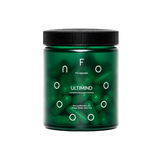
Ultimind includes Ginkgo Biloba extract with Bacopa Monnieri, Lion's Mane, Gotu Kola extract, Saffron extract, 5 HTP, DMAE and Vitamin B12, delivered in liposomal capsules made with sunflower lecithin. The directions are 2 capsules 30 minutes before a period of intense concentration. It is designed for focus, not for dementia. Because it contains ginkgo and 5 HTP, check with your doctor if you take blood thinners, antidepressants or other serotonin medicines. It is vegetarian, gluten free and lactose free. Read more in our ginkgo guide to blood flow and focus and our review of Bacopa memory trials.
Frequently asked questions
Can ginkgo biloba lower the risk of dementia?
Two large trials with more than 5,000 older adults found it did not lower the rate of dementia or Alzheimer's compared with placebo.
Is ginkgo good for Alzheimer's?
Some six month trials suggest steadier symptoms at 240 mg a day, but reviews call the evidence inconsistent. It is not a treatment for Alzheimer's.
How much ginkgo is used in studies?
Most dementia trials used 240 mg a day of a standardised leaf extract.
Can I take ginkgo with blood thinners?
Only with your doctor's approval, since ginkgo may add to bleeding risk.
How long does ginkgo take to work?
Trials in people with memory problems usually measured effects after about six months.
Is ginkgo safe for older adults?
In long trials in people over 70, side effects were similar to placebo. Check with your doctor if you take regular medicines.
Bottom line
The research on ginkgo and dementia is clear on one point: in large, long trials, ginkgo did not lower the chance of developing dementia. Evidence for easing symptoms in people already diagnosed is mixed. Ginkgo is generally well tolerated, but it is a focus ingredient, not a dementia treatment, so memory changes always deserve a doctor's view.
Explore Ultimind →Related reading: NOUS
Sources
- DeKosky ST, Williamson JD, Fitzpatrick AL, et al. Ginkgo biloba for prevention of dementia: a randomized controlled trial. JAMA. 2008;300(19):2253-62. PMID 19017911. doi.org/10.1001/jama.2008.683
- Vellas B, Coley N, Ousset PJ, et al. Long-term use of standardised Ginkgo biloba extract for the prevention of Alzheimer's disease (GuidAge): a randomised placebo-controlled trial. Lancet Neurology. 2012;11(10):851-9. PMID 22959217. doi.org/10.1016/S1474-4422(12)70206-5
- Birks J, Grimley Evans J. Ginkgo biloba for cognitive impairment and dementia. Cochrane Database of Systematic Reviews. 2009;(1):CD003120. PMID 19160216. doi.org/10.1002/14651858.CD003120.pub3
- Tan MS, Yu JT, Tan CC, et al. Efficacy and adverse effects of ginkgo biloba for cognitive impairment and dementia: a systematic review and meta-analysis. Journal of Alzheimer's Disease. 2015;43(2):589-603. PMID 25114079. doi.org/10.3233/JAD-140837


