







Summary
Mitochondria are tiny structures inside your cells that turn food and oxygen into usable energy. Their output tends to fall with age and inactivity, and regular exercise is the best studied way to support mitochondrial health.
Several B vitamins, vitamin C, iron and magnesium contribute to normal energy yielding metabolism. Supplements fill gaps but do not replace movement and a varied diet.
You slept well, ate breakfast and still feel flat by three in the afternoon. Energy starts in tiny structures inside almost every cell. This guide explains mitochondrial health in everyday words: what mitochondria do, why they change with age and which habits and nutrients have human evidence. For one nutrient in depth, read our guide to CoQ10 and ageing.
| At a glance | Mitochondria |
|---|---|
| What they are | Tiny structures inside most of your cells that turn food into energy |
| What changes with age | In muscle, mitochondrial energy production tends to fall |
| Best studied support | Regular exercise, mixing steady sessions with harder intervals |
| Nutrients with EU claims | B vitamins, vitamin C, iron and magnesium, for energy yielding metabolism |
What are mitochondria and why do we need them?
Think of mitochondria as the power stations of your cells. They use oxygen to turn fuel from food into ATP, the small molecule that powers everything from a heartbeat to a thought.
Busy tissues such as muscle, heart and brain are packed with them. They need helpers from food: B vitamins from wholegrains, eggs, dairy, meat, fish and pulses, minerals such as iron and magnesium, and CoQ10, which your body makes and also gets in small amounts from meat, fish and nuts.
Who is most affected by changes in mitochondrial health?
There is no home test for mitochondria, and tiredness has many causes. Research points to these groups:
- Older adults: muscle mitochondria produce less energy with advancing age.
- People who sit most of the day: inactivity is linked to less favourable mitochondria.
- People low in B vitamins, iron or magnesium: tiredness can appear when supply runs short. See our guide to iron, ferritin and tiredness.
- Anyone with ongoing fatigue: see a doctor before trying supplements.
How nutrients and habits may support your cells' energy
Exercise: the strongest lever for your mitochondria
Regular training makes muscles build new mitochondria and use oxygen better, in older adults too.
B vitamins and energy yielding metabolism
Under EU rules, B vitamins such as thiamine, riboflavin, niacin, B6 and B12, plus vitamin C, iron and magnesium, contribute to normal energy yielding metabolism. Many of them also contribute to the reduction of tiredness and fatigue (table below). Read more in our vitamin B12 and energy guide.
CoQ10 and tiredness
CoQ10 passes electrons along the energy chain inside mitochondria. It has no authorised EU claim, so we describe research only.
What the research shows
Ageing muscle (2005, PNAS). In 146 healthy men and women aged 18 to 89, mitochondrial DNA and ATP production in muscle declined with age. Lower output went with lower aerobic fitness.
In 146 healthy adults aged 18 to 89, the energy output of muscle mitochondria declined with age, and lower output tracked with lower fitness.
Training at any age (2017, Cell Metabolism). Over 12 weeks, high intensity interval training and combined training improved aerobic capacity and mitochondrial respiration in muscle, while resistance training alone did not. In older adults, interval training narrowed many age related differences in mitochondrial proteins.
How to train (2018, Sports Medicine). This review found that training volume may matter most for how many mitochondria you build, and intensity for how well they work.
CoQ10 and fatigue (2022, Frontiers in Pharmacology). Across 13 randomised trials with 1,126 people, CoQ10 lowered fatigue scores compared with placebo, in healthy and unwell people alike. Higher doses and longer use were linked to bigger reductions.
CoQ10 and exercise (2025, British Journal of Nutrition). Across 24 studies in healthy adults, CoQ10 raised blood levels but gave at most modest, inconsistent gains in exercise performance, with low certainty evidence.
Daily habits and doses for mitochondrial health
- Move regularly: mix steady walking or cycling with short, harder intervals, building up gradually.
- Eat for energy: the EU nutrient reference values (NRVs) below are the daily label amounts.
- CoQ10: no EU reference value exists, as the body makes it.
- With food: CoQ10 and vitamins A, D, E and K dissolve in fat, so take them with a meal.
| Nutrient | EU NRV per day | EU claim area |
|---|---|---|
| Thiamine (B1) | 1.1 mg | Energy |
| Riboflavin (B2) | 1.4 mg | Energy and tiredness |
| Niacin (B3) | 16 mg | Energy and tiredness |
| Pantothenic acid (B5) | 6 mg | Energy and tiredness |
| Vitamin B6 | 1.4 mg | Energy and tiredness |
| Vitamin B12 | 2.5 µg | Energy and tiredness |
| Biotin | 50 µg | Energy |
| Vitamin C | 80 mg | Energy and tiredness |
| Iron | 14 mg | Energy and tiredness |
| Magnesium | 375 mg | Energy and tiredness |
| Coenzyme Q10 | None set | None; research only |
Which forms are there?
- CoQ10 as ubiquinone or ubiquinol: two forms the body switches between; see our ubiquinol versus ubiquinone guide.
- Liposomal capsules: nutrients wrapped in tiny phospholipid bubbles; see our guide to how liposomes work.
Is it safe?
- Exercise: start gently and ask your doctor first if you have a health condition.
- CoQ10: in the 2022 review, only one stomach side effect was reported among 602 people taking it.
- Medicines: vitamin K affects warfarin, so ask your doctor if you take blood thinners.
Where VIT & MIN + CoQ10 fits
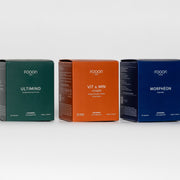
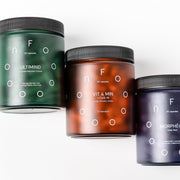
If your diet is patchy, VIT & MIN + CoQ10 combines B vitamins, vitamin C, iron, magnesium and other minerals with Coenzyme Q10 and malic acid in liposomal capsules made with sunflower lecithin, produced in Greece in GMP certified facilities. Take up to 2 capsules daily with water after your main meal. It contains vitamin K, so check with your doctor first if you take warfarin, are under medical supervision, pregnant or breastfeeding. For a wider view, see our evidence based guide to energy supplements.
Frequently asked questions
What do mitochondria actually do?
They use oxygen to turn fuel from food into ATP, the energy molecule your cells spend.
Do mitochondria decline with age?
In muscle, mitochondrial energy production tends to fall with age, but exercise improved it in older adults too.
What is the best way to support mitochondrial health?
Regular exercise has the strongest human evidence, alongside a varied diet with enough B vitamins, iron and magnesium.
Does CoQ10 give you more energy?
A 2022 review found CoQ10 lowered self reported fatigue versus placebo; effects on sports performance were small.
Which vitamins help energy production?
Under EU rules, thiamine, riboflavin, niacin, B6, B12, biotin and vitamin C contribute to normal energy yielding metabolism.
Can supplements slow ageing?
No supplement has been shown to slow ageing. Exercise has the best evidence for keeping mitochondria working well.
Bottom line
Mitochondria turn food into energy, and their output tends to fall with age and inactivity. For mitochondrial health, exercise is the strongest tool, backed by a varied diet. A broad multinutrient can cover gaps, while lasting tiredness deserves a doctor's check.
Explore VIT & MIN + CoQ10 →Sources
- Short KR, Bigelow ML, Kahl J, Singh R, Coenen-Schimke J, Raghavakaimal S, Nair KS. Decline in skeletal muscle mitochondrial function with aging in humans. Proceedings of the National Academy of Sciences of the United States of America. 2005;102(15):5618-23. PMID 15800038. doi.org/10.1073/pnas.0501559102
- Robinson MM, Dasari S, Konopka AR, et al. Enhanced Protein Translation Underlies Improved Metabolic and Physical Adaptations to Different Exercise Training Modes in Young and Old Humans. Cell Metabolism. 2017;25(3):581-592. PMID 28273480. doi.org/10.1016/j.cmet.2017.02.009
- Granata C, Jamnick NA, Bishop DJ. Training-Induced Changes in Mitochondrial Content and Respiratory Function in Human Skeletal Muscle. Sports Medicine. 2018;48(8):1809-1828. PMID 29934848. doi.org/10.1007/s40279-018-0936-y
- Tsai IC, Hsu CW, Chang CH, Tseng PT, Chang KV. Effectiveness of Coenzyme Q10 Supplementation for Reducing Fatigue: A Systematic Review and Meta-Analysis of Randomized Controlled Trials. Frontiers in Pharmacology. 2022;13:883251. PMID 36091835. doi.org/10.3389/fphar.2022.883251
- Deng H, Song T, Yin M, et al. Coenzyme Q10 supplementation increases blood concentrations but shows limited and inconsistent effects on exercise performance: a systematic review and meta-analysis. British Journal of Nutrition. 2025:1-21. PMID 41457257. doi.org/10.1017/S0007114525106211
- Tardy AL, Pouteau E, Marquez D, Yilmaz C, Scholey A. Vitamins and Minerals for Energy, Fatigue and Cognition: A Narrative Review of the Biochemical and Clinical Evidence. Nutrients. 2020;12(1):228. PMID 31963141. doi.org/10.3390/nu12010228
- Commission Regulation (EU) No 432/2012 establishing a list of permitted health claims made on foods. Official Journal of the European Union. 2012. eur-lex.europa.eu/eli/reg/2012/432
- Regulation (EU) No 1169/2011 on the provision of food information to consumers, Annex XIII (nutrient reference values). Official Journal of the European Union. 2011. legislation.gov.uk/eur/2011/1169/annex/XIII


