







Summary
Research on Lion's Mane and brain ageing centres on compounds that, in lab studies, encourage nerve growth factor, a protein that helps nerve cells grow and stay healthy.
Small human trials in older adults with memory decline found better scores on memory tests after 12 to 49 weeks, but the studies are few and small. Lion's Mane is a promising area of research, not a treatment for dementia.
Losing your keys is normal. Losing the thread of a conversation more often can be unsettling, especially if you have watched a relative go through memory decline. This guide explains what research on Lion's Mane and brain ageing really shows, from nerve growth factor in the lab to the human trials.
| At a glance | Lion's Mane (Hericium erinaceus) |
|---|---|
| What it is | An edible mushroom with long white spines, used in East Asian cooking and traditional medicine |
| Key compounds | Hericenones in the fruiting body and erinacines in the mycelium |
| Main idea studied | Support for nerve growth factor and nerve cell health |
| Human trials | A handful of small trials in older adults and young adults |
| Time frames studied | Single doses up to 49 weeks |
| Official reference value | None; it is a food and herbal ingredient, not a nutrient |
What is Lion's Mane and why is it linked to brain health?
Lion's Mane grows on hardwood trees and looks like a cascade of white icicles. It has long been eaten in Japan and China.
Two families of compounds attract most scientific interest: hericenones, found in the visible fruiting body, and erinacines, found in the root like mycelium. In laboratory studies, both have been shown to stimulate nerve growth factor, often shortened to NGF.
Lion's Mane and brain ageing: who has been studied?
- Adults over 50 with mild memory decline, sometimes called mild cognitive impairment.
- People with early Alzheimer's disease, in one small pilot trial.
- Healthy young adults, studied for focus and stress.
How Lion's Mane may support the ageing brain
Nerve growth factor and nerve cell health
NGF is a natural protein that helps nerve cells survive, grow and form connections. So far, the NGF effect of Lion's Mane compounds comes mainly from cell and animal studies.
Memory decline with age
Two Japanese trials found better scores on memory screening tests in older adults taking Lion's Mane. These were small studies and need confirming in larger groups.
Inflammation and oxidative stress
Lab research suggests Lion's Mane compounds may calm inflammation and oxidative stress in nerve tissue, two processes linked to neurodegeneration. Whether this happens in people is not yet known.
What the research shows on Lion's Mane and brain ageing
Mild memory decline (2009, Phytotherapy Research). In 30 Japanese adults aged 50 to 80 with mild cognitive impairment, those taking twelve 250 mg tablets of Lion's Mane powder a day scored better on a cognitive scale at weeks 8, 12 and 16 than the placebo group. Four weeks after stopping, scores fell again.
In a 16 week trial in adults aged 50 to 80 with mild memory decline, cognitive scores rose steadily with Lion's Mane but fell again within four weeks of stopping.
Middle aged and older adults (2019, Biomedical Research). In this placebo controlled trial, 12 weeks of Lion's Mane fruiting body improved scores on a common memory screening test. Two other tests showed no clear change.
Early Alzheimer's pilot trial (2020, Frontiers in Aging Neuroscience). People with mild Alzheimer's disease took three 350 mg capsules of erinacine A enriched mycelium a day for 49 weeks. Compared with placebo, they had better scores on cognitive screening and daily living tasks. Four people stopped because of stomach discomfort, nausea or a rash.
Healthy young adults (2023, Nutrients). In 41 adults aged 18 to 45, a single 1.8 g dose led to faster performance on one attention task an hour later. After 28 days there was only a trend toward lower stress, and several measures showed no benefit.
Review of the lab evidence (2023, International Journal of Molecular Sciences). This review summarised research showing erinacines and hericenones can stimulate NGF release and protect nerve cells in the lab, and called for better standardised supplements and more human trials.
| Study | Who | What was taken | Main finding |
|---|---|---|---|
| Mori, 2009 | 30 adults aged 50 to 80, mild decline | Fruiting body powder, 16 weeks | Better cognitive scores; faded after stopping |
| Saitsu, 2019 | Middle aged and older adults | Fruiting body, 12 weeks | Better score on one memory screen |
| Li, 2020 | Mild Alzheimer's, pilot | Mycelium extract, 49 weeks | Better cognitive and daily living scores |
| Docherty, 2023 | 41 adults aged 18 to 45 | 1.8 g, up to 28 days | Faster on one task; mostly no change |
| Szućko Kociuba, 2023 | Review of lab studies | Erinacines and hericenones | NGF support in the lab |
How much Lion's Mane was used, and when?
- Amounts studied: from a single 1.8 g dose to about 3 g of powder a day, or three 350 mg capsules of mycelium extract.
- Duration: memory benefits were measured after 8 to 49 weeks; in one study they faded after stopping.
- With food: taking it with meals may help a sensitive stomach.
- No reference value: there is no EU daily reference value or upper limit for Lion's Mane.
Forms of Lion's Mane
Fruiting body powders contain hericenones, while mycelium products contain erinacines, so the two are not interchangeable. Liposomal capsules wrap ingredients in phospholipid bubbles; learn more in our liposome explainer.
Is Lion's Mane safe?
- Trials report few side effects; stomach discomfort, nausea and skin rash have been noted.
- Avoid it if you are allergic to mushrooms.
- If you take regular medicines, are pregnant or breastfeeding, ask your doctor first.
- Memory changes always deserve a medical check; Lion's Mane is not a treatment for dementia.
Lion's Mane in FOOON Ultimind
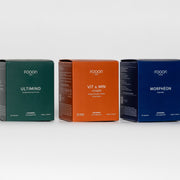
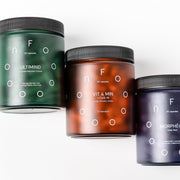
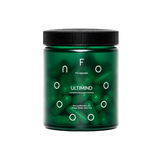
Ultimind combines Lion's Mane with Bacopa Monnieri, Ginkgo Biloba extract, Gotu Kola extract, Saffron extract, 5 HTP, DMAE and Vitamin B12 in liposomal capsules made with sunflower lecithin. The directions are 2 capsules 30 minutes before a period of intense concentration. Because it contains 5 HTP and ginkgo, check with your doctor if you take antidepressants, serotonin medicines or blood thinners. Ultimind is registered with Greece's EOF. For the everyday focus angle, read our Lion's Mane guide to memory and focus, and for related research, what the research says on ginkgo and dementia and our review of Bacopa memory trials.
Frequently asked questions
Does Lion's Mane increase nerve growth factor?
Its compounds stimulate nerve growth factor in lab studies. This has not yet been directly shown in people.
Can Lion's Mane help with dementia or Alzheimer's?
Small trials in mild memory decline and early Alzheimer's found better test scores, but it is not a treatment. Larger studies are needed.
How long does Lion's Mane take to work?
Memory trials measured changes after 8 to 49 weeks. In one study, benefits faded within four weeks of stopping.
What is the difference between fruiting body and mycelium?
The fruiting body is the visible mushroom and contains hericenones. The mycelium is the root like network and contains erinacines.
Is Lion's Mane safe to take every day?
Trials lasting up to 49 weeks reported few side effects. Avoid it if you have a mushroom allergy.
Can I take Lion's Mane with other brain supplements?
It is often combined with herbs such as Bacopa and ginkgo. Check with your doctor if you take regular medicines.
Bottom line
Research on Lion's Mane and brain ageing is promising but early. Lab studies show its compounds support nerve growth factor, and small trials in older adults found better memory scores after several months. Treat it as a long term habit alongside sleep, exercise and social contact, and see a doctor about any memory change.
Explore Ultimind →Related reading: NOUS
Sources
- Mori K, Inatomi S, Ouchi K, Azumi Y, Tuchida T. Improving effects of the mushroom Yamabushitake (Hericium erinaceus) on mild cognitive impairment: a double-blind placebo-controlled clinical trial. Phytotherapy Research. 2009;23(3):367-72. PMID 18844328. doi.org/10.1002/ptr.2634
- Saitsu Y, Nishide A, Kikushima K, Shimizu K, Ohnuki K. Improvement of cognitive functions by oral intake of Hericium erinaceus. Biomedical Research. 2019;40(4):125-131. PMID 31413233. doi.org/10.2220/biomedres.40.125
- Li IC, Chang HH, Lin CH, et al. Prevention of Early Alzheimer's Disease by Erinacine A-Enriched Hericium erinaceus Mycelia Pilot Double-Blind Placebo-Controlled Study. Frontiers in Aging Neuroscience. 2020;12:155. PMID 32581767. doi.org/10.3389/fnagi.2020.00155
- Docherty S, Doughty FL, Smith EF. The Acute and Chronic Effects of Lion's Mane Mushroom Supplementation on Cognitive Function, Stress and Mood in Young Adults: A Double-Blind, Parallel Groups, Pilot Study. Nutrients. 2023;15(22):4842. PMID 38004235. doi.org/10.3390/nu15224842
- Szućko-Kociuba I, Trzeciak-Ryczek A, Kupnicka P, Chlubek D. Neurotrophic and Neuroprotective Effects of Hericium erinaceus. International Journal of Molecular Sciences. 2023;24(21):15960. PMID 37958943. doi.org/10.3390/ijms242115960


