




Summary
Zinc for hair loss and acne makes most sense when your zinc is low: people with several types of hair loss, and people with acne, tend to have lower blood zinc.
Trials suggest zinc can reduce inflamed spots, and small studies hint at regrowth in people who were deficient. More is not better: the adult upper limit is 25 mg a day, and too much can lower copper.
A breakout that will not settle, more strands on the pillow, nails that peel at the edges. Skin, hair and nails are where small nutrient gaps often show first, and zinc is one of the minerals most linked to all three. This guide looks at zinc for hair loss, skin and acne: what it does, who runs low, what the studies found and how to use it safely.
| At a glance | Zinc |
|---|---|
| Main jobs | Cell growth and repair, immune defence, skin healing, hair and nail growth |
| EU daily reference value (NRV) | 10 mg |
| EFSA upper limit for adults | 25 mg a day |
| Best food sources | Oysters, red meat, poultry, cheese, pumpkin seeds, nuts, beans and whole grains |
| Common forms | Gluconate, picolinate, bisglycinate, sulfate, citrate |
| Partner to watch | Copper, which high zinc intakes can lower over time |
What is zinc and why do we need it?
Zinc is a trace mineral used by hundreds of enzymes. It helps cells divide and repair, supports the immune system and plays a part in making proteins such as keratin, the main building block of hair and nails.
The EU recognises that zinc contributes to the maintenance of normal hair, normal nails and normal skin. The body cannot store much zinc, so a steady supply from food matters.
Who is most likely to run low on zinc?
- Vegetarians and vegans, because compounds in grains and beans reduce zinc absorption.
- Older adults, who often eat less and absorb less.
- Pregnant and breastfeeding women, whose needs are higher.
- People with gut conditions or after weight loss surgery.
Possible signs include slow wound healing, frequent colds, a reduced sense of taste and increased hair shedding.
How zinc for hair loss and skin may help
Hair shedding and thinning
Hair follicles divide quickly and rely on zinc. Low zinc has been found in people with patchy hair loss and with sudden diffuse shedding after stress or illness.
Acne and inflamed spots
Zinc calms inflammation and affects the bacteria and oil involved in acne. It seems to help mainly with red, inflamed spots rather than blackheads.
Skin healing and brittle nails
Because zinc is needed for repair, low intake can show up as slow healing and weaker nails.
What the research shows on zinc for hair loss and acne
Zinc in four types of hair loss (2013, Annals of Dermatology). Comparing 312 people with hair loss against healthy controls, researchers found lower average blood zinc in all four types studied, including patchy hair loss and diffuse shedding. Copper levels did not differ.
Zinc for patchy hair loss (2009, Annals of Dermatology). In 15 people with patchy hair loss and low zinc, 12 weeks of zinc gluconate raised blood zinc, and 9 of the 15 showed some regrowth. The study was small and had no placebo group.
In a study of 312 people with hair loss, blood zinc was lower than in healthy controls across all four types of hair loss studied.
Zinc and acne review (2020, Dermatologic Therapy). This meta analysis found people with acne had lower blood zinc than people without acne. Zinc treatment reduced inflamed spots, with side effects no more common than with comparison treatments.
Zinc versus an antibiotic (2001, Dermatology). In 332 people with inflamed acne, 30 mg of zinc a day for three months worked, but less well than the antibiotic minocycline: 31.2 percent reached the success target with zinc against 63.4 percent with the antibiotic.
Micronutrients and hair loss (2019, Dermatology and Therapy). This review concluded zinc matters for the hair cycle, but large placebo controlled trials in deficient people are still needed.
| Study | Who | What was tested | Main finding |
|---|---|---|---|
| Kil, 2013 | 312 people with hair loss | Blood zinc and copper | Lower zinc in all hair loss types |
| Park, 2009 | 15 people, low zinc | Zinc gluconate, 12 weeks | Regrowth in 9 of 15; no placebo |
| Yee, 2020 | Meta analysis | Zinc in acne | Fewer inflamed spots |
| Dreno, 2001 | 332 people with acne | 30 mg zinc vs antibiotic | Zinc helped, antibiotic more |
| Almohanna, 2019 | Review | Nutrients and hair | Bigger trials needed |
How much zinc, and when?
- Daily reference: the EU NRV is 10 mg.
- Upper limit: EFSA's tolerable upper intake level for adults is 25 mg a day from all sources. Higher amounts used in acne trials should only be taken with medical advice.
- Timing: zinc can upset an empty stomach, so taking it after a meal is usually easier.
- Keep apart from: high dose iron and calcium supplements, which compete for absorption, and some antibiotics and thyroid medicines.
Forms of zinc
Zinc gluconate, the form used in the acne and hair trials above, is gentle and widely used. Picolinate, bisglycinate and citrate are other well absorbed forms, while zinc oxide is cheaper but less well absorbed. Liposomal capsules wrap minerals in phospholipid bubbles; see how liposomes work.
Is zinc safe?
- Nausea and stomach upset are the most common side effects, especially on an empty stomach.
- Staying above 25 mg a day for long periods can lower copper and affect blood cells.
- Check with your doctor if you take antibiotics, thyroid medicine or medicines for blood pressure or kidney problems.
- Sudden, patchy or heavy hair loss needs a doctor or dermatologist.
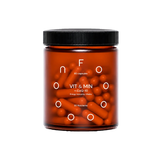
Zinc in FOOON VIT & MIN + CoQ10
VIT & MIN + CoQ10 includes zinc gluconate together with copper gluconate, biotin, selenium, iron, vitamin C and Coenzyme Q10, so zinc comes alongside the copper it needs to stay in balance. The capsules are slow release and liposomal, made with sunflower lecithin, and the directions are up to 2 capsules daily after the main meal. It is made in Greece to ISO 9001 and ISO 22000 quality standards. For more on hair, see our guide to iron and hair loss and who biotin really helps. Zinc's role at night is covered in our article on zinc and sleep.
Frequently asked questions
Can zinc deficiency cause hair loss?
Low zinc is linked with several types of hair loss, and zinc is needed for normal hair. Correcting a proven deficiency may help, but evidence comes mostly from small studies.
Does zinc help acne?
Research suggests zinc can reduce inflamed spots, though in one large trial an antibiotic worked better.
How much zinc should I take a day?
The EU reference value is 10 mg, and adults should stay below EFSA's upper limit of 25 mg a day from all sources unless a doctor advises otherwise.
How long does zinc take to work for skin or hair?
Acne trials ran for about three months, and hair studies for 12 weeks or longer.
Should I take zinc with copper?
Long term high zinc intake can lower copper, so formulas that include both help keep them in balance.
What is the best time to take zinc?
After a meal is usually best, as zinc can cause nausea on an empty stomach.
Bottom line
Zinc for hair loss and acne is most useful when intake or levels are low. Research supports zinc for calming inflamed spots and links low zinc with several types of hair loss. Aim for the reference amount from food and a balanced supplement, stay under 25 mg a day unless advised otherwise, and see a doctor for heavy or patchy shedding.
Explore VIT & MIN + CoQ10 →Related reading: SOMA
Sources
- Kil MS, Kim CW, Kim SS. Analysis of serum zinc and copper concentrations in hair loss. Annals of Dermatology. 2013;25(4):405-9. PMID 24371385. doi.org/10.5021/ad.2013.25.4.405
- Park H, Kim CW, Kim SS, Park CW. The therapeutic effect and the changed serum zinc level after zinc supplementation in alopecia areata patients who had a low serum zinc level. Annals of Dermatology. 2009;21(2):142-6. PMID 20523772. doi.org/10.5021/ad.2009.21.2.142
- Yee BE, Richards P, Sui JY, Marsch AF. Serum zinc levels and efficacy of zinc treatment in acne vulgaris: A systematic review and meta-analysis. Dermatologic Therapy. 2020;33(6):e14252. PMID 32860489. doi.org/10.1111/dth.14252
- Dreno B, Moyse D, Alirezai M, et al. Multicenter randomized comparative double-blind controlled clinical trial of the safety and efficacy of zinc gluconate versus minocycline hydrochloride in the treatment of inflammatory acne vulgaris. Dermatology. 2001;203(2):135-40. PMID 11586012. doi.org/10.1159/000051728
- Almohanna HM, Ahmed AA, Tsatalis JP, Tosti A. The Role of Vitamins and Minerals in Hair Loss: A Review. Dermatology and Therapy. 2019;9(1):51-70. PMID 30547302. doi.org/10.1007/s13555-018-0278-6
- European Food Safety Authority. Overview on Tolerable Upper Intake Levels as derived by the Scientific Committee on Food (SCF) and the EFSA Panel on Dietetic Products, Nutrition and Allergies (NDA). Version 11, August 2025. efsa.europa.eu
- Regulation (EU) No 1169/2011 on the provision of food information to consumers, Annex XIII (nutrient reference values). eur-lex.europa.eu


