





Summary
Research on saffron for low mood and sleep is encouraging: across many small trials, saffron extract lowered self rated scores for low mood and anxiety, and a 28 day trial found better sleep quality ratings in adults who slept poorly.
Most trials were short and small, and results on scales rated by clinicians were weaker. Saffron is not a treatment for depression, so low mood that lasts needs a doctor.
Long evenings, restless nights and a flat mood often arrive together in late autumn. Saffron, the red spice from the Crocus sativus flower, has been studied for both mood and sleep. This guide looks at what the trials on saffron for low mood and sleep really found, the amounts used and where caution is needed. For the wider picture, see our guide to saffron extract and mood balance.
| At a glance | Saffron (Crocus sativus) |
|---|---|
| What it is | The dried red stigmas of the saffron crocus, grown in Greece, Iran and Spain |
| Key compounds | Crocin, crocetin and safranal |
| Main areas studied | Low mood, anxiety and sleep quality |
| Amounts in the main sleep trial | 14 or 28 mg of standardised extract a day |
| Trial length | At least 4 weeks in most trials |
| Official reference value | None; it is a food and herbal ingredient, not a nutrient |
Saffron for low mood and sleep: why it is studied
Lab research suggests saffron compounds act on serotonin and other brain messengers linked to mood. In one sleep trial, saffron also raised evening levels of melatonin, the hormone that signals night to the body.
Low mood and poor sleep feed each other, so a herb that touches both is of obvious interest. The question is how well the human trials support it.
What the trials show on saffron for low mood and sleep
Sleep quality
Adults with poor sleep (2021, Sleep Medicine). In this 28 day trial, 120 adults with unsatisfactory sleep took a placebo or 14 mg or 28 mg of saffron extract one hour before bed. Both saffron doses improved sleep quality ratings, mood on waking and insomnia scores more than placebo, and worked about equally well. Evening melatonin rose, cortisol did not change and no significant side effects were reported.
In a 28 day trial in 120 adults who slept poorly, saffron extract taken an hour before bed improved sleep quality and mood on waking more than placebo.
A combination formula (2024, Scientific Reports). In 64 adults with impaired sleep, a product combining saffron with L theanine, lemon balm and valerian for six weeks did no better than placebo on sleep trackers or questionnaires. Results depend on the exact product, dose and group studied.
Low mood and anxiety
Review of 23 trials (2019, Nutrition Reviews). Saffron had a large effect on symptoms of low mood and anxiety compared with placebo, and helped when added to antidepressants. The authors found signs of publication bias, meaning positive trials may be over represented.
Pooled mood, anxiety and sleep scores (2019, Complementary Therapies in Medicine). Across 21 trials, saffron lowered self rated scores for low mood and anxiety and improved a standard sleep quality questionnaire in 3 trials. Scores rated by clinicians did not change.
The largest review so far (2026, Nutritional Neuroscience). This analysis of 34 trials with 1,769 adults found lower self rated scores for low mood and anxiety, rated the certainty as moderate, but again saw no significant change on clinician rated scales.
| Study | Who | Design | Main finding |
|---|---|---|---|
| Lopresti, 2021 | 120 adults with poor sleep | 14 or 28 mg, 28 days | Better sleep quality and waking mood |
| Gutiérrez Romero, 2024 | 64 adults with impaired sleep | Saffron in a combination, 6 weeks | No better than placebo |
| Marx, 2019 | 23 trials | Meta analysis | Large effect on mood and anxiety symptoms; publication bias |
| Ghaderi, 2019 | 21 trials | Meta analysis | Lower self rated mood, anxiety and sleep scores |
| Mahmoudi, 2026 | 34 trials, 1,769 adults | Meta analysis | Lower self rated scores; no change on clinician scales |
How much saffron was used, and when?
- Amounts: the main sleep trial used 14 or 28 mg of standardised extract a day, and both worked about equally well.
- Timing for sleep: the main sleep trial gave saffron one hour before bed.
- Duration: the reviews included trials lasting at least four weeks, so give it time.
- Quality: saffron is costly and sometimes adulterated, so choose standardised extracts from trusted makers.
Is saffron safe?
- At trial doses, saffron extract was well tolerated, with few side effects reported.
- Avoid saffron supplements in pregnancy and while breastfeeding.
- If you take antidepressants, blood pressure or blood thinning medicines, ask your doctor first.
- Low mood lasting more than two weeks, or any thoughts of self harm, need prompt medical help.
Saffron in FOOON Ultimind
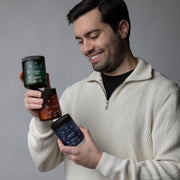
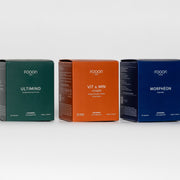
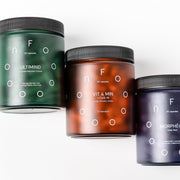
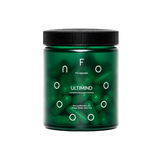
Ultimind combines saffron extract with Bacopa Monnieri, Ginkgo Biloba, Lion's Mane, Gotu Kola, 5 HTP, DMAE and vitamin B12, taken as 2 capsules 30 minutes before a period of intense concentration. It is a daytime formula for focus, not a sleep aid. It is not for under 18s or during pregnancy or breastfeeding, and because it contains 5 HTP and ginkgo, check with your doctor if you take antidepressants or blood thinners. Ultimind is registered with the National Organisation for Medicines (EOF). For the evening, Morphéon is our melatonin free sleep formula. Read more in our glycine and sleep guide and our guide to sleep in the dark season.
Frequently asked questions
Does saffron help you sleep?
In a 28 day trial, saffron extract taken an hour before bed improved sleep quality ratings in adults who slept poorly. More trials with objective sleep measures are needed.
Can saffron lift low mood?
Many small trials found lower self rated scores for low mood. Saffron is not a treatment for depression, so see your doctor if low mood persists.
How much saffron extract is used in studies?
The main sleep trial used 14 or 28 mg of standardised extract a day for 28 days.
Can I take saffron with antidepressants?
Some trials added saffron to antidepressants, but only under medical supervision. Never combine them without asking your doctor.
Is cooking with saffron enough?
Cooking amounts vary widely, so trials used measured, standardised extracts to give a reliable daily dose.
When should I take saffron for sleep?
The main sleep trial gave it one hour before bed, every evening for 28 days.
Bottom line
The evidence on saffron for low mood and sleep is promising but still young. Small trials show lower self rated scores for low mood and anxiety and better sleep quality ratings, while clinician rated results are weaker. Use a standardised extract, give it several weeks and keep your doctor involved if low mood lasts.
Explore Ultimind →Related reading: NOUS
Sources
- Lopresti AL, Smith SJ, Drummond PD. An investigation into an evening intake of a saffron extract (affron®) on sleep quality, cortisol, and melatonin concentrations in adults with poor sleep: a randomised, double-blind, placebo-controlled, multi-dose study. Sleep Medicine. 2021;86:7-18. PMID 34438361. doi.org/10.1016/j.sleep.2021.08.001
- Gutiérrez-Romero SA, Torres-Narváez ES, Zamora-Gómez AC, et al. Effect of a nutraceutical combination on sleep quality among people with impaired sleep: a randomised, placebo-controlled trial. Scientific Reports. 2024;14(1):8062. PMID 38580720. doi.org/10.1038/s41598-024-58661-z
- Marx W, Lane M, Rocks T, et al. Effect of saffron supplementation on symptoms of depression and anxiety: a systematic review and meta-analysis. Nutrition Reviews. 2019;77(8):557-571. PMID 31135916. doi.org/10.1093/nutrit/nuz023
- Ghaderi A, Asbaghi O, Reiner Ž, et al. The effects of saffron (Crocus sativus L.) on mental health parameters and C-reactive protein: A meta-analysis of randomized clinical trials. Complementary Therapies in Medicine. 2019;48:102250. PMID 31987241. doi.org/10.1016/j.ctim.2019.102250
- Mahmoudi R, Mohammadi-Sartang M, Servatyari K, Rafieipour N. Effect of saffron on depression, anxiety and mood disorder: a GRADE assessed systematic review and meta-analysis of 34 randomized controlled trials. Nutritional Neuroscience. 2026;29(7):816-837. PMID 41693488. doi.org/10.1080/1028415X.2025.2602153


