




Summary
Glycine for sleep has a small but encouraging body of human research: about 3 g taken before bed has been linked with better sleep quality and less tiredness the next day.
It seems to work partly by helping the body cool down at night. The trials are small, so think of glycine as a gentle helper alongside good sleep habits, not a sleeping pill.
You get enough hours in bed, yet wake up heavy headed and reach for a second coffee by ten. Glycine for sleep is one of the simplest ideas in sleep nutrition: a common amino acid, taken in the evening, studied for deeper rest and sharper mornings. Here is what the trials found, the amounts used and who should be careful.
| At a glance | Glycine |
|---|---|
| What it is | The smallest amino acid; the body makes it and also gets it from food |
| Main areas studied | Sleep quality, falling asleep, next day tiredness and alertness |
| Amount studied | 3 g taken shortly before bed in the key sleep trials |
| Food sources | Protein foods, especially collagen rich ones such as gelatin and bone broth |
| Official reference value | None; glycine is not an essential nutrient |
What is glycine and why do we need it?
Glycine is an amino acid, one of the building blocks of protein. Your body makes it, so it is not classed as essential, and it forms a large share of collagen in skin, tendons and bones.
It also works as a messenger in the brain and spinal cord, where it can calm nerve signals. Food sources include meat, fish, eggs, dairy and collagen rich foods such as gelatin and bone broth.
Who may benefit most from glycine for sleep?
- People who sleep but wake unrefreshed, the group studied in the early trials.
- Anyone in a short spell of too little sleep, such as a busy week or exams.
- People who run warm at night, since glycine appears to help the body shed heat.
- Active people focused on recovery.
How glycine for sleep may help
Cooling the body for deeper sleep
Your core temperature naturally drops in the evening, which helps signal sleep. In animal studies, glycine increased blood flow to the skin, so more heat left the body and core temperature fell.
Falling asleep and staying asleep
Early human trials reported better rated sleep after glycine at bedtime, and work with glycine rich collagen points to fewer night awakenings.
Next day alertness and less fatigue
When sleep was cut short on purpose, people taking glycine felt less tired the next day and did better on an attention test.
What the research shows on glycine for sleep
Review of the early trials (2012, Journal of Pharmacological Sciences). The researchers summarised human studies in which glycine before bedtime improved sleep quality in poor sleepers. In rats, it also lowered core temperature.
Sleep restriction trial (2012, Frontiers in Neurology). Healthy volunteers slept 25 percent less than usual for three nights and took 3 g of glycine or a placebo before bed. With glycine, they reported significantly less fatigue the next day and scored better on a test of sustained attention.
In a 2012 trial, people who slept 25 percent less than usual for three nights felt less tired and stayed sharper the next day when they took 3 g of glycine before bed.
How it works in the brain (2015, Neuropsychopharmacology). In this animal study, glycine promoted deep sleep and cooled the body by widening skin blood vessels, acting through the brain's master clock.
Glycine rich collagen before bed (2024, European Journal of Nutrition). In 13 active men with sleep complaints, 15 g of collagen peptides taken an hour before bed for seven nights led to fewer awakenings in the sleep lab. Total sleep time and time to fall asleep did not change.
Scoping review (2026, Journal of Dietary Supplements). Across 22 trials, all three glycine sleep trials reported a benefit on at least one sleep measure, but the authors call for larger studies.
| Study | Who | What was taken | Main finding |
|---|---|---|---|
| Bannai, 2012 | Healthy adults on restricted sleep | 3 g glycine before bed | Less next day fatigue, better attention |
| Bannai and Kawai, 2012 | Review of human and rat studies | Glycine before bed | Better sleep quality; lower core temperature |
| Kawai, 2015 | Rats | Oral glycine | Deeper sleep via the brain's body clock |
| Thomas, 2024 | 13 active men with poor sleep | 15 g collagen peptides | Fewer night awakenings |
| Fan, 2026 | 22 trials reviewed | Glycine or collagen | Promising, but trials are small |
How much glycine, and when?
- Amount studied: the key sleep trials used 3 g of glycine taken shortly before bed.
- Timing: in the evening, roughly 30 to 60 minutes before lights out, so it can support the natural fall in body temperature.
- Good partners: magnesium and calming herbs. A 2023 trial of a blend with tryptophan, glycine, magnesium, tart cherry and L theanine found people fell asleep faster, though the effect cannot be credited to glycine alone.
- No official limit: glycine is not an essential nutrient, so there is no EU reference value or upper limit.
Forms of glycine
Pure glycine comes as a powder or in capsules. Collagen and gelatin also supply it, but alongside other amino acids, so servings are much larger. Glycine is also bound to minerals, as in magnesium glycinate. Liposomal capsules wrap nutrients in tiny phospholipid bubbles, explained in our guide to liposomes.
Is glycine safe?
- At the amounts used in sleep studies, glycine has been well tolerated; mild stomach upset is possible.
- If you are pregnant, breastfeeding, under medical care or take prescription medicines, especially for mental health, check with your doctor first.
- Ongoing insomnia, loud snoring or waking up gasping need a medical check rather than a supplement.
Glycine in FOOON Morphéon
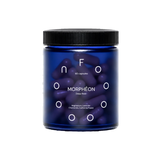
Morphéon includes L Glycine together with magnesium, zinc, chromium, L Tryptophan and extracts of lavender, lemon balm and chamomile, with no melatonin. The directions are 2 capsules 30 minutes before sleep, with water. The capsules use sunflower lecithin for liposomal delivery and are produced in Greece in GMP certified facilities. For the other ingredients, see our guide to magnesium for sleep, our review of lemon balm, chamomile and lavender and our evidence based habits for deeper sleep.
Frequently asked questions
Does glycine really help you sleep?
Small human trials suggest it may improve sleep quality and reduce next day tiredness, but the evidence is still limited.
How much glycine should I take for sleep?
The main sleep trials used 3 g taken shortly before bed. Follow the directions on any product you use.
When is the best time to take glycine?
In the evening, around 30 to 60 minutes before bed, so it can support the natural drop in body temperature.
Will glycine make me groggy in the morning?
Not in the trials so far. In one study, people felt less tired and were sharper the next day after taking it.
Can I take glycine with magnesium?
Yes, they are often combined, and magnesium glycinate already pairs the two. Check with your doctor if you take prescription medicines.
Is glycine the same as melatonin?
No. Melatonin is a hormone that signals night time, while glycine is an amino acid that appears to help the body cool down and settle.
Bottom line
Glycine for sleep is a gentle option with early human evidence for better sleep quality and brighter mornings, at about 3 g before bed. It works with your body's cooling rhythm rather than sedating you. Pair it with a cool, dark bedroom and regular sleep times, and see a doctor if poor sleep persists.
Explore Morphéon →Related reading: HYPNOS
Sources
- Bannai M, Kawai N. New therapeutic strategy for amino acid medicine: glycine improves the quality of sleep. Journal of Pharmacological Sciences. 2012;118(2):145-8. PMID 22293292. doi.org/10.1254/jphs.11r04fm
- Bannai M, Kawai N, Ono K, Nakahara K, Murakami N. The effects of glycine on subjective daytime performance in partially sleep-restricted healthy volunteers. Frontiers in Neurology. 2012;3:61. PMID 22529837. doi.org/10.3389/fneur.2012.00061
- Kawai N, Sakai N, Okuro M, et al. The sleep-promoting and hypothermic effects of glycine are mediated by NMDA receptors in the suprachiasmatic nucleus. Neuropsychopharmacology. 2015;40(6):1405-16. PMID 25533534. doi.org/10.1038/npp.2014.326
- Thomas C, Kingshott RN, Allott KM, et al. Collagen peptide supplementation before bedtime reduces sleep fragmentation and improves cognitive function in physically active males with sleep complaints. European Journal of Nutrition. 2024;63(1):323-335. PMID 37874350. doi.org/10.1007/s00394-023-03267-w
- Fan Z, Nelson JM, Wallace TC. Glycine Bioavailability and Sleep-Related Outcomes Following Oral Glycine and Collagen Supplementation: A Scoping Review. Journal of Dietary Supplements. 2026;23(5):602-622. PMID 42687500. doi.org/10.1080/19390211.2026.2726197
- Langan-Evans C, Hearris MA, Gallagher C, et al. Nutritional Modulation of Sleep Latency, Duration, and Efficiency: A Randomized, Repeated-Measures, Double-Blind Deception Study. Medicine and Science in Sports and Exercise. 2023;55(2):289-300. PMID 36094342. doi.org/10.1249/MSS.0000000000003040
- Ramos-Jiménez A, Hernández-Torres RP, Hernández-Ontiveros DA, et al. An Update of the Promise of Glycine Supplementation for Enhancing Physical Performance and Recovery. Sports. 2024;12(10):265. PMID 39453231. doi.org/10.3390/sports12100265


