




Summary
Sleep apnoea is a common condition in which breathing repeatedly stops or becomes shallow during sleep; it needs a medical diagnosis and treatment, not a supplement.
Weight loss, less alcohol and a Mediterranean style of eating can support treatment. Nutrients such as vitamin D are being studied, but none has been shown to fix apnoea itself.
Your partner nudges you because the snoring has stopped, then restarts with a snort. You wake with a headache, need a nap by lunchtime and nod off in front of the television. These can be signs of a breathing problem during sleep. This guide explains how to recognise sleep apnoea, why it matters, which treatments work and, honestly, what diet and nutrients can and cannot do.
| At a glance | Obstructive sleep apnoea |
|---|---|
| What happens | The throat narrows or closes during sleep, so breathing pauses and oxygen drops |
| How common | An estimated 936 million adults aged 30 to 69 worldwide |
| Key signs | Loud snoring, pauses in breathing, gasping, morning headaches, daytime sleepiness |
| Diagnosis | A sleep study at home or in a sleep clinic |
| Main treatments | CPAP, oral devices, weight loss, positional therapy and sometimes surgery |
| Role of nutrition | Supports weight and heart health; no nutrient treats apnoea |
What is sleep apnoea and why does it matter?
In obstructive apnoea, the soft tissues of the throat relax and block the airway during sleep. The brain senses falling oxygen and briefly wakes you to breathe again, often without you knowing. This can happen dozens of times an hour.
The result is broken, unrefreshing sleep. Over time, untreated apnoea is linked with high blood pressure, heart and metabolic problems, mood changes and road accidents from sleepiness. That is why it deserves a proper diagnosis.
Signs and who is most at risk
- Loud, regular snoring, especially with pauses or choking sounds.
- Waking unrefreshed, with morning headaches or a dry mouth.
- Daytime sleepiness, poor concentration or irritability.
- Night time waking to urinate more than usual.
- Higher risk groups: people carrying extra weight, men, women after menopause, older adults, people with a large neck, and those who drink alcohol in the evening.
How lifestyle and nutrition may help alongside treatment
Weight loss and the Mediterranean diet
Extra weight around the neck and upper body narrows the airway. A Greek trial found that adding a Mediterranean diet and lifestyle programme to standard treatment brought clear benefits for blood sugar, blood pressure and inflammation.
Cutting back on alcohol
Alcohol relaxes the throat muscles. Studies link higher alcohol intake with a greater risk of apnoea, so limiting drinks, especially in the evening, is a sensible step.
Vitamin D and other nutrients
People with apnoea tend to have lower vitamin D. Whether correcting it changes apnoea itself has not been shown, so it is best seen as part of general health.
Better sleep habits and insomnia
Many people with apnoea also have insomnia. Regular sleep times, daytime activity and a calm evening routine can help sleep quality, while apnoea itself is treated medically.
What the research shows on sleep apnoea and lifestyle
How common it is (2019, Lancet Respiratory Medicine). Using data from 16 countries, researchers estimated that 936 million adults aged 30 to 69 have mild to severe obstructive apnoea, and 425 million have moderate to severe forms.
An estimated 936 million adults aged 30 to 69 worldwide live with obstructive apnoea.
The MIMOSA trial (2020, Nutrients). In 187 overweight Greek adults with moderate to severe apnoea, all given CPAP, a six month weight loss Mediterranean diet or lifestyle programme improved blood sugar, blood fats and blood pressure. Standard care alone did not.
Inflammation and oxidative stress (2021, European Journal of Nutrition). In the same trial, the diet and lifestyle groups had lower markers of inflammation, and the lifestyle group also had lower oxidative stress, compared with CPAP alone.
Alcohol and apnoea (2018, Sleep Medicine). Pooling 21 studies, higher alcohol consumption was linked with a 25 percent greater risk of apnoea.
Vitamin D (2023, Hormones). Across 18 studies with 5,592 people, those with apnoea had lower vitamin D and more deficiency, mainly in moderate and severe cases. CPAP did not change vitamin D levels.
| Study | Who | Focus | Main finding |
|---|---|---|---|
| Benjafield, 2019 | Data from 16 countries | How common | 936 million adults affected |
| Georgoulis, 2020 | 187 overweight adults | Diet and lifestyle with CPAP | Better heart and metabolic markers |
| Georgoulis, 2021 | Same trial | Inflammation | Lower inflammation markers |
| Simou, 2018 | 21 studies | Alcohol | 25 percent higher risk |
| Loh, 2023 | 18 studies, 5,592 people | Vitamin D | Lower levels in apnoea |
What nutrients can and cannot do
- Can: support a healthy weight, heart and blood sugar as part of a balanced diet.
- Can: correct deficiencies such as low vitamin D, which matter for general health.
- Cannot: open a blocked airway or replace CPAP or other prescribed treatment.
- Cannot: make it safe to ignore loud snoring with pauses or gasping.
Treatments that work
CPAP, a machine that gently blows air through a mask to keep the airway open, is the standard treatment for moderate to severe apnoea. Other options include custom mouth devices, sleeping on your side, weight loss and, for some, surgery. Your doctor will choose based on a sleep study.
Safety: sleep aids and apnoea
- Alcohol and sedative medicines can relax the throat muscles; avoid them in the evening if you have or suspect apnoea.
- Do not use any sleep supplement as a substitute for diagnosis or CPAP.
- If you have apnoea, ask your doctor before starting any sleep aid.
- Seek urgent advice if you feel dangerously sleepy while driving.
Where FOOON Morphéon fits
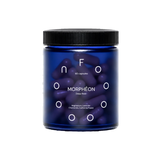
Morphéon is a melatonin free, vegetarian sleep formula with magnesium, zinc, chromium, L Glycine, L Tryptophan and extracts of lavender, lemon balm and chamomile, taken as 2 capsules 30 minutes before sleep. It is designed to support relaxation and sleep quality. It does not treat apnoea, so please see a doctor first if you snore loudly or stop breathing at night, and use it only with their agreement. For healthy sleep habits, see our evidence based habits for deeper sleep, our guide to glycine for sleep and our magnesium for sleep guide.
Frequently asked questions
What are the first signs of sleep apnoea?
Loud snoring with pauses or gasping, waking unrefreshed, morning headaches and feeling very sleepy during the day.
Can supplements fix sleep apnoea?
No. Apnoea needs medical treatment such as CPAP or a mouth device. Nutrition supports general health alongside it.
Does losing weight help apnoea?
Weight loss can reduce pressure on the airway and is often part of treatment, alongside a doctor's care.
Is low vitamin D linked to apnoea?
People with apnoea tend to have lower vitamin D, but taking it has not been shown to treat apnoea.
Does alcohol make apnoea worse?
Studies link higher alcohol intake with a greater risk of apnoea, so cutting back, especially at night, is sensible.
How is apnoea diagnosed?
With a sleep study, either at home or in a clinic. Ask your doctor if you notice the warning signs.
Bottom line
Sleep apnoea is common, often missed and worth taking seriously. If you snore loudly, stop breathing at night or feel exhausted by day, see a doctor for a sleep study. A Mediterranean way of eating, weight loss and less alcohol can support treatment, but no nutrient replaces it.
Explore Morphéon →Related reading: HYPNOS
Sources
- Benjafield AV, Ayas NT, Eastwood PR, et al. Estimation of the global prevalence and burden of obstructive sleep apnoea: a literature-based analysis. Lancet Respiratory Medicine. 2019;7(8):687-698. PMID 31300334. doi.org/10.1016/S2213-2600(19)30198-5
- Georgoulis M, Yiannakouris N, Kechribari I, et al. Cardiometabolic Benefits of a Weight-Loss Mediterranean Diet/Lifestyle Intervention in Patients with Obstructive Sleep Apnea: The "MIMOSA" Randomized Clinical Trial. Nutrients. 2020;12(6):1570. PMID 32481487. doi.org/10.3390/nu12061570
- Georgoulis M, Yiannakouris N, Tenta R, et al. A weight-loss Mediterranean diet/lifestyle intervention ameliorates inflammation and oxidative stress in patients with obstructive sleep apnea: results of the "MIMOSA" randomized clinical trial. European Journal of Nutrition. 2021;60(7):3799-3810. PMID 33839919. doi.org/10.1007/s00394-021-02552-w
- Simou E, Britton J, Leonardi-Bee J. Alcohol and the risk of sleep apnoea: a systematic review and meta-analysis. Sleep Medicine. 2018;42:38-46. PMID 29458744. doi.org/10.1016/j.sleep.2017.12.005
- Loh HH, Lim QH, Kang WH, et al. Obstructive sleep apnea and vitamin D: an updated systematic review and meta-analysis. Hormones. 2023;22(4):563-580. PMID 37704922. doi.org/10.1007/s42000-023-00481-3
- Kechribari I, Kontogianni MD, Georgoulis M, et al. Association of adherence to the Mediterranean diet and physical activity habits with the presence of insomnia in patients with obstructive sleep apnea. Sleep and Breathing. 2022;26(1):89-97. PMID 33813674. doi.org/10.1007/s11325-021-02351-x


